Always on
This project successfully funded on 17th May 2026, you can still support them with a donation.
This project successfully funded on 17th May 2026, you can still support them with a donation.
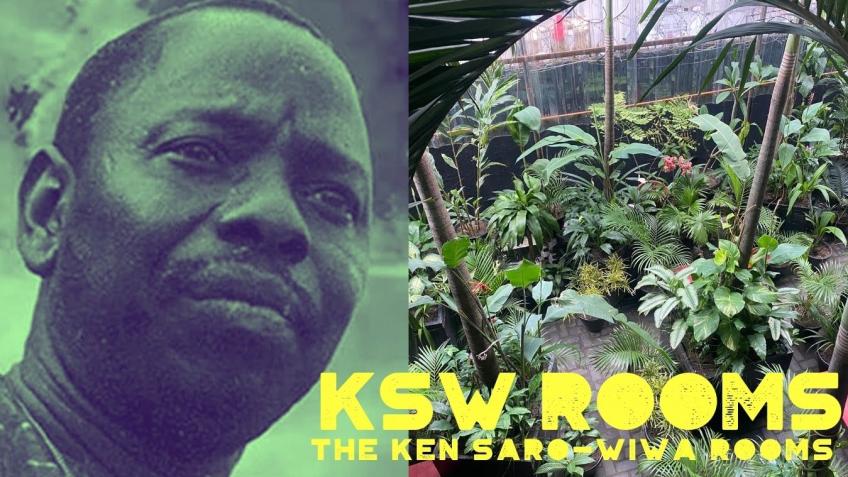
Please help us install solar power at the KSW Rooms. A museum dedicated to the story of slain environmental activist Ken Saro-Wiwa.
Introduction:
My name is Zina Saro-Wiwa. I am an artist and the daughter of Ken Saro-Wiwa the writer and environmental activist who was executed by the Nigerian military government in November 1995. He and 8 other innocent men were hanged for leading peaceful protests against the way that Shell Oil were polluting Ogoniland - our rural ancestral homeland - in pursuit of oil profits at the expense of farmlands, rivers and the livelihoods of rural Ogoni people. I run a non-profit organisation called the Mangrove Arts Foundation and one of the projects under its umbrella is a museum that I launched in November 2025 for my father. It's called The Ken Saro-Wiwa Rooms or KSW Rooms. We have managed to open one floor of the museum and we would like to open it to the public whilst we work to open the other floors and the cafe.
You can see images of the museum here: www.mangroveartsfoundation.com/projects/kswrooms
I opened The KSW Rooms to finally be able to tell my father's incredible story in a more expansive, contemporary art-led way. The museum is located at his old office building in Port Harcourt, Nigeria. The capital of the oil producing Niger Delta region.
The Ask:
The problem is we cannot open to the public because of chronic electricity supply issues. So we at the Mangrove Arts Foundation are launching this crowdfund to pay for a solar inverter system for the building. Nigeria - despite being an oil producing nation - has a chronic electricity supply problem and the museum does not receive regular electricity from the grid during the daytime. We cannot afford to open the one floor we have established at the museum because the diesel costs to run the generator are not only extremely expensive but also noisy, disturbing visitors' enjoyment of the artworks many of which are sound and video based.
To run this museum on solar, we need up to 50kv per floor. Because of the amount of TV screens and air conditioners and the upcoming cafe costs, it means that we need a substantial amount of regular solar power. The costs of the solar inverter system per floor - which include installation - is around $35,000 and we need to power two floors. So we are looking to raise $70,000.
Ken's story and philosophy matters more than ever at this time when global oil and gas supplies are under threat. Nigeria is at a crossroads where it must find a way to manage its resources in a way that will benefit all and Ken's message has always spoken to this and other dire sets of needs: the need to protect the environment whilst prospecting for oil; the need for equitable sharing of resources; the need for education; the need to respect indigenous culture. The handbook for morally responsible resource extraction and economic development was written by Ken but he was killed for his very reasonable ideas by a callous and kleptocratic government obsessed with personal enrichment. Through this museum Ken's ideas and joyful contribution to art and culture more widely get shared in ways that are for everyone to experience and digest. It is vital that we are able to remain open and free from the tyranny of diesel and noisy generators. Ken's legacy deserves clean energy powering it.
More background on Ken Saro-Wiwa:
Ken Saro-Wiwa was a highly-educated, urbane and well-travelled man of the people who adored Nigeria and adored Ogoniland his rural ancestral homeland. A humorous and highly critical cultural commentator, he wrote books, plays and TV shows that satirized the Nigerian condition. He served his country in government and was someone who saw to it personally that hundreds of people from the Niger Delta were properly educated. Education truly was his passion. He dedicated his life to his people and when the pollution of oil companies in particular Shell Oil became too much, he educated people about the injustices they were facing with regards the wanton disregard for their environment and the ways in which they were being excluded from the oil industry altogether. He taught that in essence the Ogoni people were being genocided and that we need to peacefully protest our rights so that we might be heard and the pollution stop.
This museum is a space where Ken Saro-Wiwa's memory is preserved. A place where all aspects of his life and career - not just the activism - are brought together so there is a broader and stronger picture emerging of how such an activist is created. The museum is a place of healing in a country where there are little to no communal institutions where such issues can be worked through. It is a place where his legacy is properly archived and a central point for the many thousands of people around the world who are still inspired by him. At the KSW Rooms visitors can immerse themselves in Ken's story and his diverse and incredible literary archive.
The building where it is located is already a place where, every year, thousands of people gather to hold an all-night candlelight vigil where they remember the Ken Saro-Wiwa and the other 8 Ogoni men that were hanged by Sani Abacha, the military dictator at the time. During this vigil, the people remember his sacrifice and continue to hold the powers that be accountable for this murder and continued lack of clean up of Ogoniland. With your help this site can become a place of exploration as well as healing. A way to imagine more equitable and environmentally sound futures for Nigeria and other parts of the world that suffer as a result of Big Oil. A place to learn about and reconnect with nature.
About the Mangrove Arts Foundation:
Founded by British-Nigerian artist and curator, Zina Saro-Wiwa, The Mangrove Arts Foundation uses food, art, research and environmentally-focused projects to regenerate the maligned Niger Delta. The Niger Delta is a region of global importance to the world’s oil economy but has seen scandalously little development and is beset by a vicious cycle of violence, corruption and ongoing pollution. Historically, however, this is a place rich in cultural and artistic traditions with a dramatically diverse and hugely fertile ecosystem that, for local economic survival and for global posterity, must be protected, revived and developed.
The Mangrove Arts Foundation is inspired by the legacy left behind by the founder’s father Ken Saro-Wiwa. A writer, businessman, and renaissance man Ken was also one of Africa’s premier environmentalists. He campaigned peacefully for the rights of the Ogoni people whose land was being polluted and devastated without shame or consequence by international oil companies like Shell Oil and their activities were propped up by the military regime. A regime that against their better judgement and international condemnation hanged Ken Saro-Wiwa and 8 other innocent Ogoni men in a bid to silence them. This tragic and powerful legacy has inspired many around the world. But for Ken’s artist daughter Zina this legacy is a deeper one than being anti-oil: “Whilst cleaning up oil spillage and offering remuneration is extremely important, it is vital to interpret his legacy more powerfully, dynamically and imaginatively. This means we have to turn to the power of culture.”
The Mangrove Arts Foundation is dedicated to facilitating opportunities for culture workers be they artists, writers, musicians, indigenous wisdom keepers, chefs and entrepreneurs to create powerful new opportunities for economic growth, education and storytelling in the magical Niger Delta. We believe that profound storytelling and research into the cultural and historical legacy of the Niger Delta is the pathway to long-lasting restitution. To learn more about Mangrove Art Foundation projects and universe please visit www.mangroveartsfoundation.com.
Funding method
Keep what you raise – this project will receive all pledges made