Green Monstahs
United States
Crowdfunder is secure
Your payment details are protected
Aim
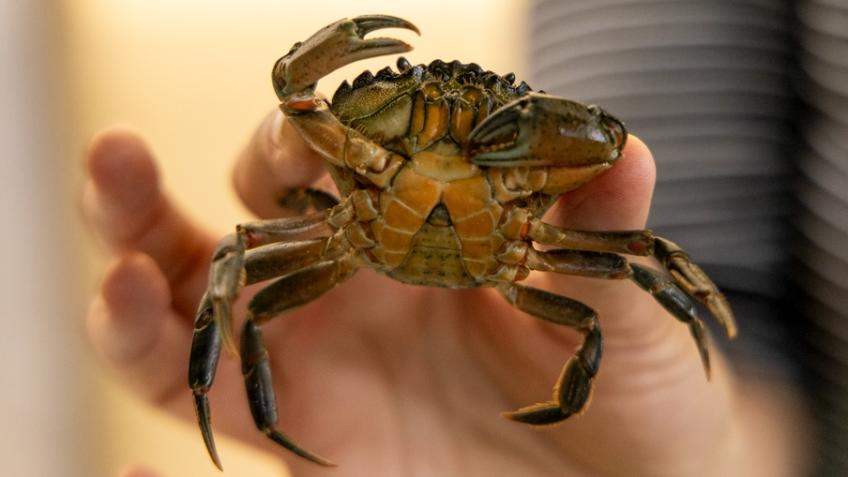
Green Monstahs explores how invasive green crabs are threatening New England’s coasts and how adding them to the menu may be the solution.
Over 200 years ago, a sneaky species stowed away in the ballast of ships as they made their way across the Atlantic from Europe to the young nation of the United States. This species would go largely unnoticed for about 175 years, when its population began to boom, and it started wreaking havoc on local organisms and coasts. The species, one you may never have heard of… is the European Green Crab.
Today, the Green Crab is known as one of the most invasive marine organisms in the world, and their coastal destruction is raising some big questions: primarily, how to deal with them.
Green Monstahs will explore what makes the Green Crab so destructive and some of the innovative ways locals are handling them.

New England, known worldwide for its seafood and charming coasts, is under attack by Green Crabs.
Over the last 10-15 years, Green Crab Populations have boomed throughout the New England coast. Warmer winters have enabled their populations to grow exponentially, threatening fisheries and the livelihoods of fishermen and women across the region, and destroying vital coastal habitats and ecosystems.
Slowly, New Englanders have found innovative ways to incorporate them into their everyday lives while removing them from the water. Fishermen are adding them to their bait, farmers are using them in compost and fertilizers, and the fastest-growing solution… adding them to the menu.
Green Monstahs will highlight how individuals are working together to combat the crabs.
The story will begin in the underwater world, showing just how destructive the crabs are. We see them being caught and hauled by a local harvester, and learn why he decided to start catching the crabs.
From here, we begin the journey of how the crab gets from the harvester to the plate, and even sometimes into a drink or two.
Green Monstahs will use a hybrid of documentary styles to engage viewers in the story. A mix of traditional wildlife cinematography along with strong characters will capture the audience as we explore just how much of a menace green crabs are and how locals are adapting to their increased presence. Underwater footage will feature the crabs in their world and the damage they cause. Aerial footage showcases the towns and picturesque coasts of New England, highlighting the region's long fishing traditions. All the while, through close-ups, we see individuals coming together to deal with the crabs and even turn them into something others want to enjoy.
It takes a team to make a film: this is where you come in. Every film has its costs (even a student film) and cannot be completed without an amazing team of supporters.
Your support will help:
- Fund our production costs, including travel, crew meals, insurance, and more.
- Fund specialized equipment, such as drones, to capture the story in the best way possible.
- Fund Post-production finishing to make the project look and sound its best.
- Fund Festival Submissions to get this story out to as many people as possible.
You will also be supporting New Englanders by funding this project and helping raise awareness of Green Crabs and their effects on the coast and fisheries.
Emily Brady - Director
Emily is an MFA candidate at American University studying Environmental and Wildlife Filmmaking. She has worked on projects for the National Park Service, Maryland Public Television (PBS), Airlie Farms, and many more. Emily focuses much of her work on telling conservation stories and how people interact with the natural world around them. She was first introduced to the European Green Crabs and their destructive habits while working as an Environmental Educator on Nantucket. On island she learned just how unknown this species was to most people and some of the ways locals were dealing with the crabs, and is excited to share how the wider New England community is handling this invasive species.
Melanie Lippert - Producer
Based in Washington, D.C., Melanie is an Associate Producer for National Geographic’s Pristine Seas team. She has worked on conservation and film projects throughout the world, primarily in Africa in regions such as Somaliland, Zanzibar, Madagascar & Namibia. Previously working as a journalist, zookeeper and biologist, Melanie has a unique perspective and understanding of natural history storytelling and field work. Having worked closely with trafficked cheetah cubs, endemic, endangered Zanzibar red colobus & elusive okapi, she is particularly passionate about stories examining human-wildlife conflicts, the illegal wildlife trade and community-based conservation efforts.
Antonio Roche - Associate Producer
Antonio is a filmmaker and MFA candidate at American University. A first-generation American, his mother and father hail from Chile and Venezuela respectively. Growing up in a multicultural household, his work primarily focuses on telling Latino stories in an American context.
His short script, The Bunny, made it to the quarter-finals of the PAGE International Screenwriting Competition, and his thesis project, Melt, has been selected for presentation at this year’s University Film and Video Association Annual Conference and received Best Short Script at American University’s Visions Awards.
While his primary focus is fiction filmmaking, Antonio is excited to join the “Green Monstah” team as an Associate producer and help bring the project’s vision to fruition.
Funding method
Keep what you raise – this project will receive all pledges made by 17th November 2026 at 7:43pm CST